Phytotherapy is one of the oldest medical sciences based on the usage of officinal herbs and complex drugs made of them for treatment and precaution of various health issues. The founder of the phytotherapy is Hippocrates who stated that each disease has its own herb for treatment. Mother nature gave us all the needed medicine, we should know how to use it. In spite of traditional medicine herbal medication doesn’t use chemicals, artificial colors, aromatics, products of genetic engineering and other components that adversely affect the health. This medical practice is very effective, has beneficial influence on the entire organism, grants the general strengthening and practically has no side effects.
History of herbal medication
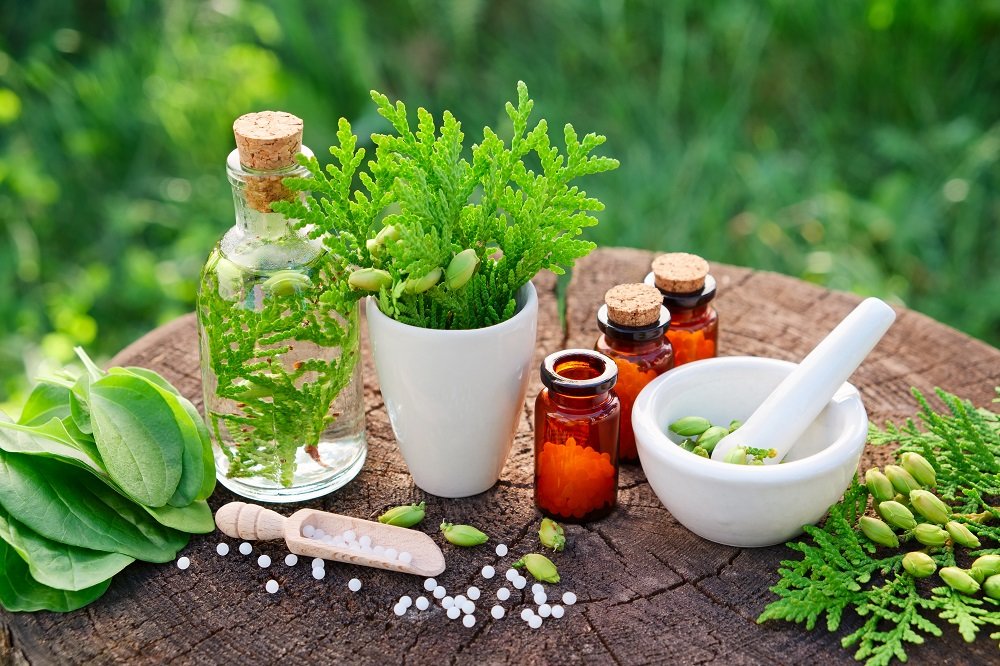
Going back to the developed culture of Ancient Egypt, phytotherapy was improved by Greeks and famous doctors from Rome. We received the knowledge about herb treatment depicted in Arabic manuscripts and middle century European monastery folios. All the knowledge built up the basis for the manufacturers of modern medicine and also suppliers of traditional phototherapeutic means: teas, infusions, decoctions etc.
Origin of phytotherapy
People used herbs for treating various maladies and herbs since the ancient times. Our ancestors held the first experiments regarding the research of healing characteristics of herbs on themselves. They also got some knowledge observing the animals which search for the necessary healing herbs instinctively.
This way there appeared the first phytotherapy leaving the trace in the “shamanic“ treatment with herbs. From mouth to mouth one shaman shared his knowledge with another. Only several thousand years later herbal medication became the essential part of cultural heritage of the ancient civilizations.
Benefits of phytotherapy
The main advantage of herbal medication is that heals not only some separate organ, but the entire organism. Herbal medicinal products improve the immune system and have general tonic effect. However, it is necessary to remember that each medicine should be taken regularly to be effective.
Medicine contain many useful components. These are spirits, alkaloids, acids, proteins, minerals, vitamins and many others. In the medical raw material there are more than 12 thousand biologically active components. Scientists assume that it’s only 1/10 of all the available armory of the flora.
Another obvious benefit of the healing components contained in herbs is their biological availability. Besides herbal raw material costs much cheaper.
Phytopreparations have a soft effect on the organism, they are less toxic, don’t cause allergy and addiction. Such medicines do not harm the defensive powers of the organism, but also active towards a number of microorganisms, which obtained immunity against the antibiotics, and also may strengthen the immunity system off the person.
Negative factors of phytotherapy
Phytotherapy can’t cure all the diseases. With the help of computing equipment and good professionals traditional medicine treats those illnesses which can’t be cured by phytotherapy (fractures, appendicitis, blood strokes etc).
There is also a threat of toxication. One had to be very careful with the dosage as some herbal medicines may be poisonous. If the proper dosage is taken, they will cure. However, if the person took more medicine than it is prescribed, it may have negative results.
One should always follow the advice of the professional concerning the consuming of herbal medicinal products with traditional drugs. Otherwise it may be not always useful.
Psychological phenomena in phytotherapy
In case the patient extremely trusts the doctor, there is a possibility to put into patient’s head the idea of future positive course of disease. Very often the patient fully relies on the “cure” scenario written by the doctor.
Hypochondriac suggestible patients have increased number of unwanted reactions in case when the doctor in good faith warned about possible side effects (for example, allergy, headache, diarrhea etc.). Expectation and extreme self-examination often leads to false feelings and discreditation of the treatment as a result.
There is also a syndrome of false expectations. It appears when the person overestimates phytotherapy possibilities. The patient waits for the promised wonder of quick healing, but there is no easy and fast recovery using herbs. As a result there is disappointment in this method, although in reality the treatment may bring a lot of use. The doctor should explain to the patient that the result won’t come very quickly and the person shouldn’t give up.
Spectrum of action
Nowadays herbs are often used in the following spheres:
Traditional medicine:
- Chinese treatment method
- The method of Ayurveda
Classical medicine:
- Homeopathy
- Aromatherapy
Researches prove that using herbs may warn the threat of many maladies.
- Atherosclerosis
- Arterial hypertension
- Stroke
- Cancer
There is a great number of herbs which possess anti-inflammatory, pain relieving, antimicrobial and immune stimulating effect. They may cure diseases of various body systems.
- Respiratory
- Cardiovascular
- Urino-genital
- Nervous system
- Diseases of the gastrointestinal tract
- Diabetes etc.
According to WHO about 80% of world population prefer herbal medicine. Besides, 7% of all flora (more than 23 000 plants) are used in phytotherapy.
Regardless of the fact that phytotherapy is quite harmless, it should be applied very carefully. The consultation of the doctor is a must. The patient also needs to learn carefully how to take the medicine and possible side effects.
Sources:
- https://www.who.int
- https://mechanism.ucsd.edu/research/mechanismsandpsychologicalexplanations—forweb.pdf
- https://www.canadianhealthmall.com
- https://medlineplus.gov/herbalmedicine.html
- https://www.britannica.com/science/phytotherapy